At Spotify, the average director now manages 14.7 direct reports. Five years ago, that number was 8.3. The company calls this "scaling efficiently." The directors call it something else entirely.
This pattern repeats across corporate America. Meta increased middle management spans by 40% between 2019 and 2023. Amazon's L6 managers—the backbone of its operational machine—now oversee teams that would have required two managers a decade ago. Meanwhile, these same companies have added layers of executive vice presidents, chief experience officers, and heads of transformation. The message is clear: expand the top, stretch the middle, automate the bottom.
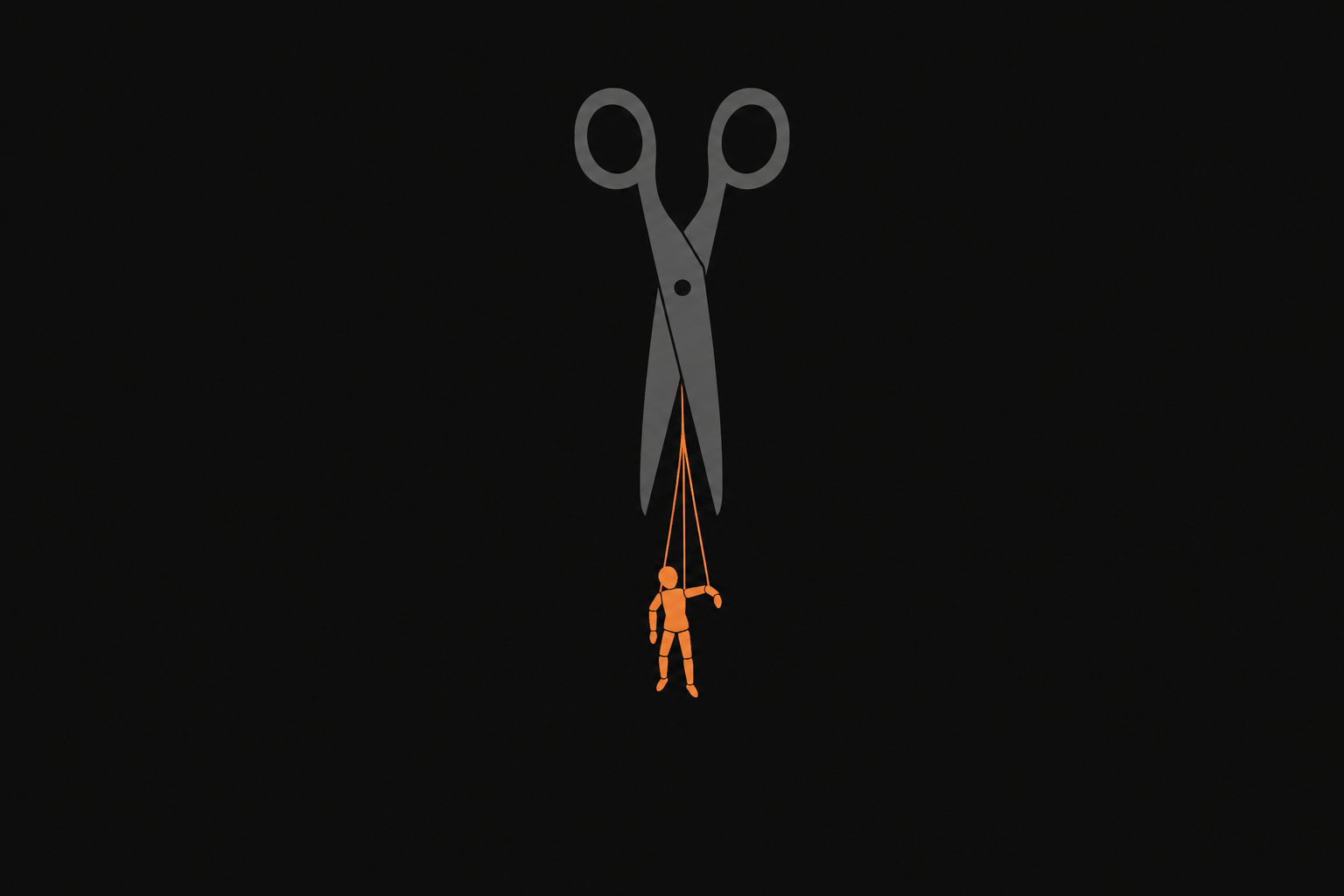
Middle management is collapsing under impossible mathematics. Companies have systematically expanded their spans of control while stripping away their decision-making authority. The result is a management layer that owns all the accountability but none of the power—a perfect recipe for institutional paralysis.
The Authority Deficit
Consider the modern product manager at a Fortune 500 technology company. She oversees 12 engineers, coordinates with six different business units, and reports progress to three separate leadership committees. She cannot hire, fire, or set compensation. She cannot approve budgets above $10,000 or change technical architecture without committee review. She can schedule meetings and send status updates.
This is not management. This is performance art.
The data tells the story with brutal clarity. Gallup's 2024 State of the Manager report found that 67% of middle managers feel they lack the authority to execute their responsibilities effectively. Yet these same managers report to an average of 2.3 different senior leaders—up from 1.6 in 2019. They coordinate across an average of 4.7 departments, compared to 2.9 five years ago.
Netflix provides the starkest example. The company eliminated entire layers of middle management while simultaneously expanding the scope of remaining managers. A single director of content operations now handles responsibilities that previously required three separate roles: budget oversight, vendor management, and cross-functional coordination. The company saved $47 million in management costs. It also created a bottleneck so severe that content decisions now take 34% longer to implement.
"We've created a layer of people who are responsible for everything and empowered to do nothing. Then we wonder why execution feels broken."
The technology sector has pioneered this approach, but it has spread across industries. JPMorgan Chase restructured its commercial banking division in 2023, expanding middle management spans by an average of 31% while reducing their budget authority by 22%. The result: loan approval times increased by 18%, and customer satisfaction scores dropped to their lowest levels in four years.
The Forgotten Middle
Corporate investment patterns reveal a stark truth: middle managers are the only organizational layer that companies systematically under-invest in. Executive development programs proliferate—McKinsey estimates that Fortune 500 companies spend $14 billion annually on C-suite and senior leadership development. Frontline training receives similar attention, driven by customer experience metrics and operational efficiency mandates.
Middle management gets the leftovers.
General Electric spent $180 million on leadership development in 2023. Less than 12% reached middle managers. The company invested more in executive coaching for its top 200 leaders than in development programs for its 3,400 directors and senior managers combined. This isn't unusual—it's the norm.
The consequences compound. Middle managers at companies with below-average development investment are 2.3 times more likely to leave within two years, according to research from the Corporate Executive Board. They're also 40% less likely to recommend their company as a place to work. Yet most companies continue to treat middle management development as a cost center rather than a strategic investment.
Unilever provides a rare counterexample. The company restructured its management development approach in 2022, allocating 45% of its leadership investment to middle managers. The results were immediate: employee engagement scores increased by 23%, project completion rates improved by 31%, and voluntary turnover among high-potential middle managers dropped by 57%. Other companies have noticed. Few have followed suit.
The reason is simple: middle management development doesn't appear on quarterly earnings calls. Executive development signals board-level sophistication. Frontline training drives immediate operational metrics. Middle management investment disappears into the organizational middle—visible in its absence but invisible in its presence.
The Execution Chasm
The distance between executive vision and operational reality has never been wider. CEOs announce bold digital transformations, sustainability commitments, and cultural shifts. Middle managers translate these mandates into project plans, resource requests, and team objectives. The gap between announcement and implementation has become a chasm.
Microsoft's 2023 AI integration initiative illustrates this dynamic perfectly. CEO Satya Nadella announced the company would "infuse AI into every product and service" by the end of 2024. The announcement generated positive analyst coverage and boosted stock price by 7%. Six months later, middle managers were still waiting for basic implementation guidelines, budget allocations, and technical specifications.
The problem is structural, not personal. Executive teams operate on quarterly cycles and annual strategies. Middle managers work in weekly sprints and daily firefighting. Executives optimize for market perception and board approval. Middle managers optimize for team productivity and customer delivery. These are fundamentally different time horizons and success metrics.
Research from Harvard Business School tracked 847 strategic initiatives across 127 companies between 2019 and 2023. Initiatives with clear middle management ownership and authority achieved their objectives 73% of the time. Initiatives that bypassed or marginalized middle management succeeded just 34% of the time. Yet companies continue to announce strategies without empowering the people responsible for executing them.
The technology industry has created particularly acute versions of this problem. Agile methodologies promise rapid iteration and continuous improvement. In practice, they often create endless coordination overhead for middle managers who must translate between executive roadmaps and engineering teams. Product managers at companies like Uber and Airbnb report spending 60% of their time in meetings that exist solely to bridge the gap between strategic direction and tactical execution.
The Structural Reckoning
Middle management burnout isn't a wellness problem. It's a systems problem. Companies have created organizational structures that guarantee failure, then blame individuals when those structures produce predictable results.
The solution isn't meditation apps or flexible work policies. It requires fundamental changes to how companies distribute authority, allocate resources, and measure success. Middle managers need decision-making power that matches their accountability. They need development investments that match their strategic importance. They need organizational structures that enable execution rather than obstruct it.
Some companies are beginning to recognize this reality. Shopify eliminated layers of senior management while expanding middle management authority in 2023. The company gave directors and senior managers budget control, hiring authority, and strategic input that previously required VP approval. Employee engagement increased. Decision speed doubled. Stock price followed.
But Shopify remains an outlier. Most companies continue to squeeze middle management while expecting better results. They'll continue to get what they've designed: exhausted managers, stalled initiatives, and the slow dissolution of organizational capability.
The question isn't whether this system is sustainable. It's not. The question is whether companies will fix it before it breaks them entirely.